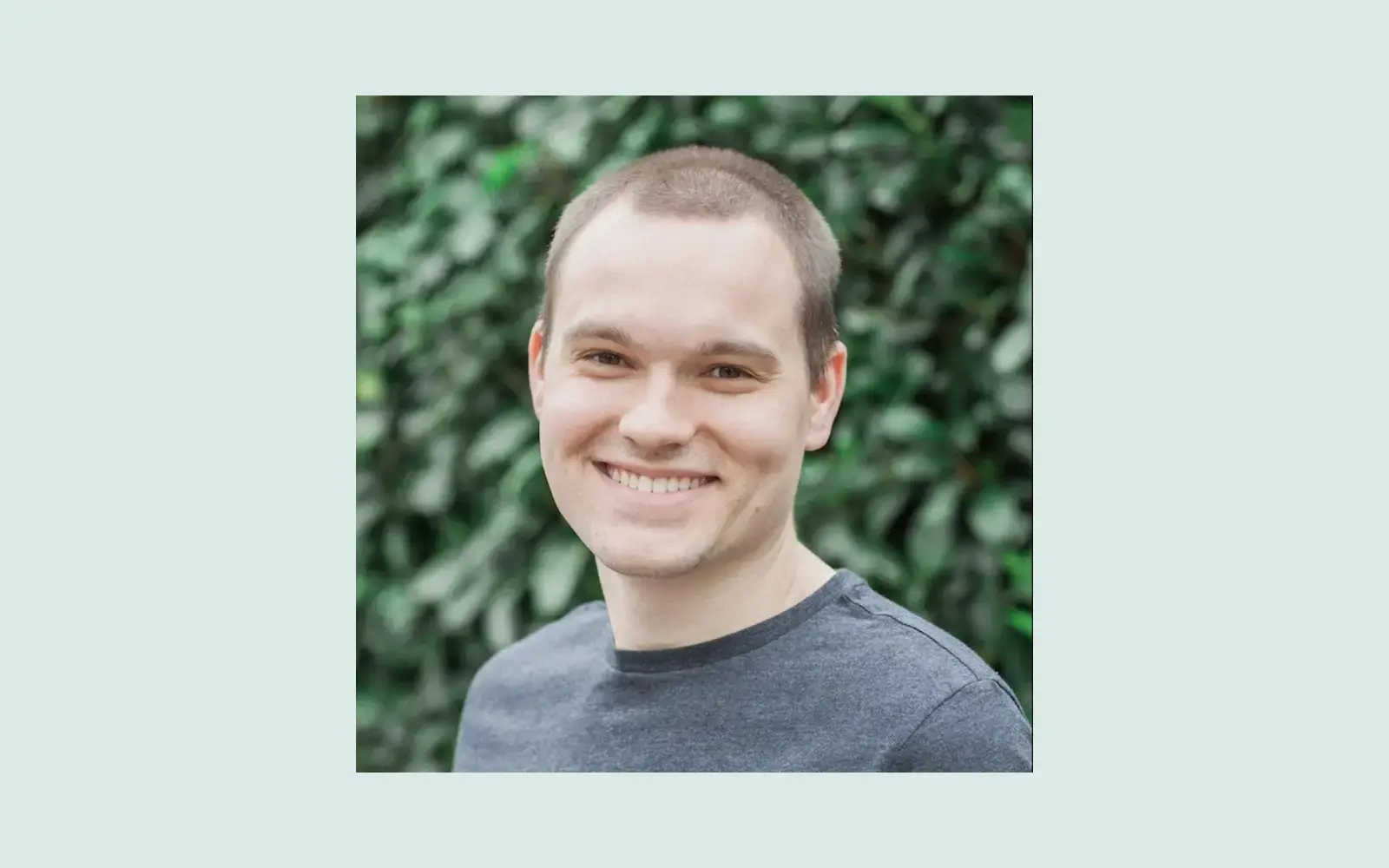
Wade Foster still remembers the Thursday night.
He told the story at AUTONOMOUS: OBSOLETE in May 2026, Board of Innovation’s conference on how AI changes the way companies operate. The Zapier CEO took us back to spring 2023.
GPT-4 had just dropped. He was on a Zoom call with his two co-founders for two hours, and the only question was: what are we going to do with this?
ChatGPT had launched a few months earlier, and the Zapier team shared it in the general Slack channel the way you'd share any cool new product. Interesting. Worth a look. No mandates. GPT-4 was different. The improvement was massive. The cost curves were falling. And if you played it forward six months, then another six, the trajectory was obvious.
Wade called a code red. They didn't even have a concept for that internally. They just knew they needed to shake people and say: this is important.
Here's what they did next. A hackathon. Company-wide. Every role. HR, finance, sales, marketing, engineering. Everybody stops what they're doing and builds something with AI.
A building week changed AI adoption at Zapier.
Zapier’s own account reports a rise from 10% to 50% during the hackathon. That is a company-reported adoption measure, and a useful example of what hands-on work can unlock.
Wade was direct about what doesn't work. AI committees. Well-intentioned groups of leaders sitting in conference rooms, trying to dream up an end-to-end AI strategy before anyone has touched the tools. He's talked to companies that spent six months in that mode with nothing to show for it.
And here's what makes that observation so uncomfortable. Most companies did exactly that. If you're reading this newsletter, there's a good chance your organization's first move was to form a working group, appoint a committee, commission a landscape review. The instinct makes sense. This feels big and risky and you want to be thoughtful.
But thoughtful and slow are not the same thing. And the gap between "we're being strategic" and "we're stalling" is narrower than most leaders want to admit.
From hackathon to more agents than employees
What happened after the hackathon is the part that changes the conversation. People didn't stop building. They kept going. An accountant created a reconciliation agent. A marketer built a content workflow. The people ops team redesigned onboarding. It spread because it was useful, not because someone mandated it.
Pretty soon, Zapier had more AI agents than employees.
That's what happens when you give people tools and space. They build. You can't stop them. And you shouldn't want to.
But here's where it gets interesting. For two full years after the code red, Wade deliberately did not name anyone to lead AI transformation. On purpose. He worried that if one person owned it, everyone else would say "those are the AI people over there" and keep doing their jobs the same way.
He wanted 100% of the company to feel like AI was their job. And for two years, that worked.
Why the CPO became the CAO
Then it didn't. Not because adoption stalled. Because it succeeded. They had so many agents, so many workflows, so much happening across every function that the problem shifted. How do you identify the highest-ROI problems? How do you reorganize when the jobs themselves have changed? How do you rethink job families when an accountant can build their own agent?
When Wade looked around for who was best positioned to lead that next phase, the answer wasn't a technologist. It was Brandon, his Chief People Officer.
Brandon's team had moved the fastest. They'd redesigned how they worked more aggressively than any other function. And Wade realized that the skills the company needed next weren't technical. They were organizational. Change management. Culture. The sticky human problems that come after the adoption curve.
So he asked his CPO to become his Chief AI Officer.
The leadership move points to a question beyond initial adoption: who helps the organization redesign roles, choose valuable workflows and take responsibility for the results? That work can become harder as more people start building.
I wrote about something connected to this earlier this year. In The Leader's Dilemma, I argued that your people aren't resisting AI. They're resisting ambiguity. And that's on you as a leader. The hackathon is how you start to solve for ambiguity. It puts tools in people's hands. It compresses the feedback loop between "I don't know what AI can do" and "I just built something with it." That loop is everything.
But the CPO-to-CAO move solves for the harder thing. Once everyone is building, someone has to rethink what the organization looks like now. Not "on the other side," because there is no other side. Right now. And that person needs to understand people, not just models.
Wade also said something about competition that I think applies to every company, not just software. The pace at which this space moves is unlike anything he's seen in 15 years. He called it a 10 out of 10 exciting time and a 10 out of 10 anxiety time at the same moment. And that tension is what I hear from every leader I talk to.
Here’s what I take from Wade’s story. Building gave the team evidence to work with. Distributed ownership helped people find useful applications. As the work spread, the leadership needs changed.
That is a sequence worth examining in your own organization: give people a concrete way to learn, notice what becomes useful, and adjust ownership as the work develops.
By the numbers
*AUTONOMOUS: OBSOLETE · Zapier CEO Interview · May 2026*
What to do this week.
Wade made a distinction that I think applies to every organization. He described two types of companies. Permission-based, where you need approval before redesigning a workflow. And forgiveness-based, where you redesign first and deal with the consequences after.
My advice: figure out which one you're in. Then act accordingly.
If you're in a forgiveness-based org, stop waiting. Run a hackathon this month. Pick a day, clear calendars, give everyone access to Claude or ChatGPT or whatever tools you have, and let them build.
If you're in a permission-based org, you need air cover first. Find the leader who will back you. Then run the hackathon with their sponsorship. Wade had his CEO and his board behind the push. You need your version of that.
Either way, building gives your team something specific to evaluate. Use that evidence to improve the plan and decide what deserves to move forward.
From the portfolio
The gap between planning and building is where most transformations stall. And it's where both of these companies operate.
Board of Innovation hosted AUTONOMOUS: OBSOLETE, the summit where Wade shared this story. They're an AI Transformation Studio that helps mid-market and Fortune 500 companies close the gap between AI curiosity and organizational change. When Wade talks about the shift from adoption to reorganization, that's exactly the inflection point BOI helps companies navigate.
AlignAI helps teams refine and approve AI initiatives, bringing governance into the path from experimentation toward production. Its AI COE Collective, developed with Slalom, gives enterprise leaders a place to work through these operating questions.
If AI tools are in place and the work is still difficult to change, tell me what’s happening in the team. We can explore whether Human Machines would be useful.
Are you planning your way toward AI, or building your way into it?