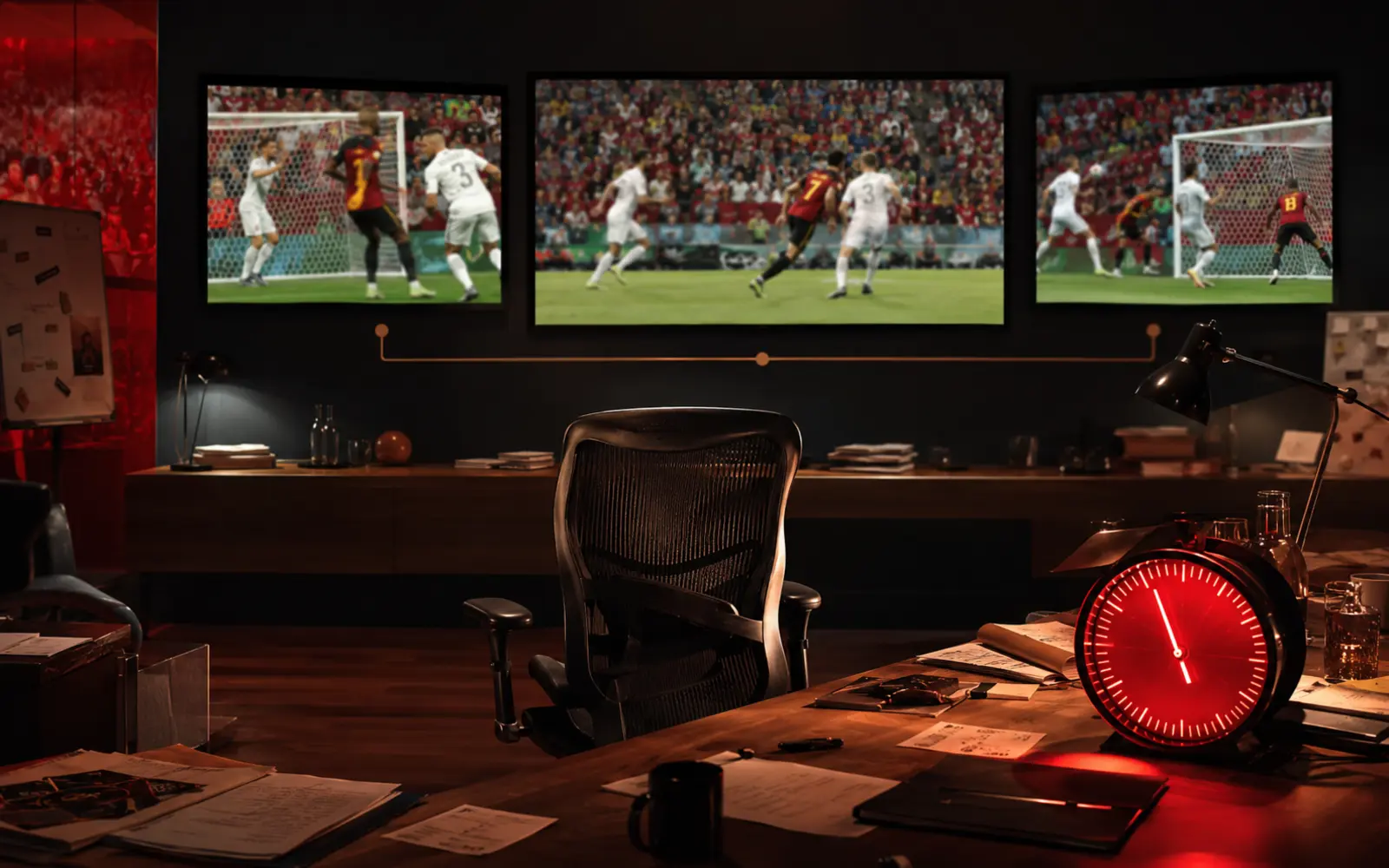
“Surfers ride black sea horses through an underwater world of neon coral reefs, past glowing jellyfish, raising their ice-cold Brewlanders.”
That’s the ad. The whole ad.
Brewlander, a small independent craft brewery in Singapore, put paragraphs like that on posters, billboards, and magazine pages. Fully written prompts, ready to paste into any text-to-video model. Anyone who generated their own Brewlander commercial from a printed prompt got a discount on the beer.
The campaign signs off “AI responsibly,” and in June it took a Bronze Lion at Cannes in the Challenger Brand category. A seven-person brewery showing up in the same set as the global giants.
The logic underneath is the interesting part. When a cinematic commercial costs ninety seconds and a browser, the finished film stops being the scarce thing. The idea is the scarce thing. So Brewlander gave the execution away and made the economics the message: we spend on the beer.
The finished film stops being the scarce thing. The idea is the scarce thing.
Every commercial leader is now living some version of that shift. Visible production spend used to signal seriousness. A shopper who can generate a comparable frame on their phone reads it differently, as waste, or worse, assumes you generated it anyway and discounts the whole thing.
There’s a second answer to the same shift, and it runs the opposite direction. Apple sculpted its new Apple TV ident from solid glass, then released the behind-the-scenes footage to prove it, and a Cannes jury called it “gloriously handmade” in a year drowning in generated design. Aerie pledged never to use AI-generated bodies, put Pamela Anderson in front of it, and comps grew 25%. iHeartMedia promised “guaranteed human” radio after finding 90% of listeners want media made by people, including listeners who use AI themselves.
Spend so visibly human it becomes the message, or spend invisibly and put the money in the product. The expensive middle is what dies.
That’s the fork. Brewlander gave the execution away and pointed the budget at the beer. Apple and Aerie spent heavily on proof of human hands and made the spend itself the story. Both positions are coherent, and both are defensible in front of a CFO. The position that no longer defends itself is the middle: competent, generated-looking work at generated-looking scale, which costs real money and reads as free.
The discipline this asks of you is knowing, for every campaign, what the scarce input actually is. For Brewlander it was the idea, so they published it. For Apple it was the craft, so they filmed it. Everything downstream of the scarce input is getting cheaper by the quarter, and budgets built before that was true are still paying premium prices for it.
BY THE NUMBERS
Cannes Lions 2026 · company and campaign disclosures
What to do this week.
This issue described two different positions. Brewlander gave the execution away and redirected the budget into the product. Apple and Aerie spent heavily on proof of human craft and made that proof the message. Both positions won at Cannes. Your move this week is to figure out which one is yours.
Look at your biggest investment this quarter, whether that's a campaign, a product launch, a client deliverable, or an internal initiative. Ask two questions.
First: is the thing we're producing something a well-prompted model could approximate by Friday? If yes, you're in Brewlander territory. The value isn't in the output. It's in the idea, the positioning, the strategy underneath it. Spend accordingly.
Second: is the thing we're producing something that only our people, our process, or our relationships could have made? If yes, you're in Apple territory. The craft is the differentiator. But craft that isn't visible is craft that doesn't count. Make the proof part of the work.
The only position that doesn't hold is the middle: real budget going into work that could have been generated, without the strategic redirection that makes the economics intentional.
From the portfolio
Brewlander’s campaign was a specification. The idea written precisely enough that anyone could execute it. Execution was the commodity. The spec was the asset.
FifthRow is built for that inversion. A well thought through brief goes in, and finished research and strategy work comes back in minutes. The judgment your team brings to writing the brief is what matters. FifthRow handles what sits downstream of it.
A seven-person brewery understood where the value moved and rebuilt its marketing around the answer. The same question is sitting in your budget right now.
Is the way you're showing up in market still matching how consumers decide what's real and what's not?