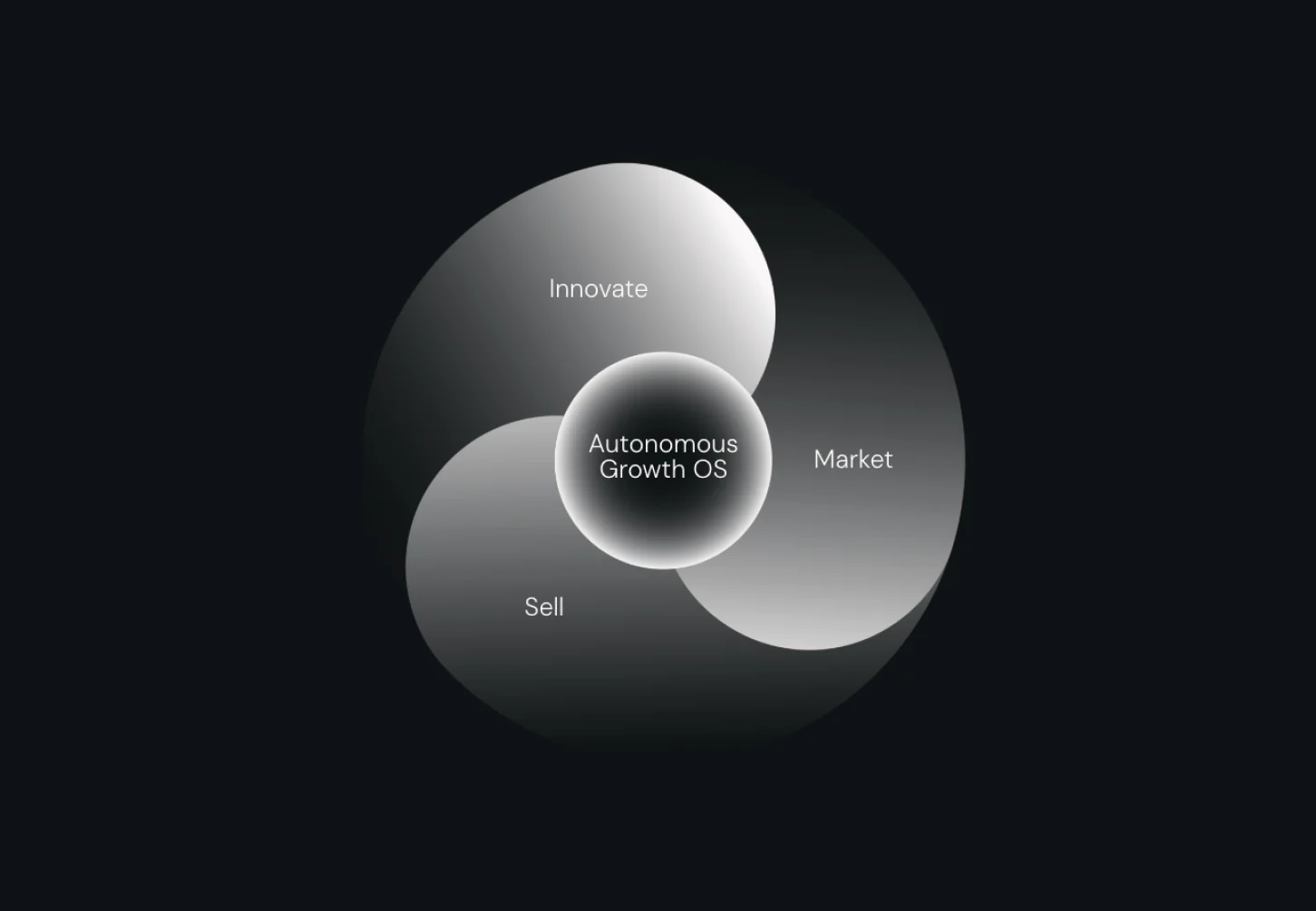
It's the same discipline that built your product pipeline, your brand portfolio, your capital plan: innovation, run as a portfolio of bets, balanced on purpose. Leaders have trusted it for decades. Almost nobody is running it on AI, and that gap is the difference between collecting wins and compounding them.
The wins are real, and they're everywhere. Brand teams reading culture in days instead of quarters. Ops groups handing themselves back a thousand hours. Big teams setting the standard, and the bar is rising fast. That's worth celebrating. It's also the entry fee. The leaders pulling ahead have moved to the next question: what does all of it add up to?
List every AI effort your teams are running (the pilots, the copilots, the experiments nobody asked permission for) and you're not looking at a set of projects. You're looking at a portfolio. It has a shape. And almost nobody chose that shape. It accumulated, one reasonable decision at a time.
The three rings, in the market, right now
Here's what the three rings of that portfolio look like with AI, in the market, right now.
Improving what exists. Start with a recurring task your team already understands. Better product content, a shorter review process or less time gathering information can create a useful first return, provided you measure the result against the work it replaces.
Stretching into adjacent territory. Coca-Cola’s 2026 World Cup content series, covered in an earlier article, combined production partners and AI tools to plan a larger set of responses to the tournament. The strategic question is what repeatable capability remains after a campaign ends.
Changing the game. Nubank reported one million NuCel customers in June 2026. The mobile service, developed with Claro, extends its offer beyond banking. It is an example of business-model adjacency, rather than evidence that AI caused the customer growth.
Now run your portfolio instinct over your own AI efforts, and you'll likely see what I see inside most companies: nearly everything sits in the first ring, and nobody chose that shape. Your instinct would never allow that anywhere else.
The quiet cost of an unmanaged portfolio
An unmanaged portfolio carries a cost. Budget can flow to whichever project is most visible while valuable initiatives wait in review. Look at approvals, handoffs and time spent in queues alongside model performance.
So let me ask you what I'd ask over coffee. Do you know the value of your commercial AI portfolio as it stands today? Do you know where you're overbuilding and where you're underinvested? Do you know exactly what's blocking your most valuable initiatives from reaching the market? If those answers are fuzzy, the shape is choosing itself.
If you can't see the portfolio, you can't manage it, you can't improve it, and you certainly can't accelerate it.
The good news is the playbook scales directly to this moment. Board of Innovation, one of our portfolio companies, has been teaching the AI version for years. They call it the Three Waves (efficiency, enhanced quality, and new systems) and their counsel lands the whole idea in one line: invest across all three at once, with a clear vision for the third. Their portfolio-mapping tools are open-source, which tells you something. The discipline is available to everyone. The differentiator is whether a leader actually runs it.
That's where compounding comes from. Balanced and sequenced, the first-ring wins pay for the adjacent bets. The adjacent wins buy you the credibility and cash to chase your Nubank. And every quarter the flywheel spins faster. That's the difference between having AI wins and having an engine. It is a difference of shape, not spend. If you want a head start, your central AI team likely has a version of this view already; governance forced them to build it. Borrow it, then run it the way you run the rest of your portfolio.
What to do this week.
Run your playbook once, on this. Take thirty minutes. List every AI effort your commercial teams are running, and place each one in a ring: improving what exists, stretching adjacent, or exploring what could change the game. Look at the shape.
Then make the three moves you'd make in any portfolio review:
Retire one redundant bet in the safe ring.
Fund the adjacent bet you actually believe in.
Write down the one game changing question your team has earned the right to explore this quarter.
You've run this exact exercise on products and brands a hundred times. Same muscle, newest capability.
From the portfolio
The same idea runs through two of our companies, at opposite ends of the work.
Board of Innovation owns the strategy end: the AI transformation studio that rewires how enterprises create value, and the source of the Three Waves framework and the open source portfolio tools above. Start there if the shape of your portfolio is the question.
AlignAI helps teams manage intake, review and visibility. Its July 2026 case study describes an unnamed top-10 U.S. bank with more than 130 AI initiatives. The published comparison reports build-approval cycles moving from nine-plus months to about four months. That is a company-reported result for this program, not a guarantee for every customer.
Weighing where AI could open a new source of growth for your business? Tell me which opportunity you’re considering, and we can explore how BOI could help.
Your teams earned the wins, and that's worth celebrating. The bigger opportunity is the one you're best equipped for: running those wins the way you've always run innovation, as a portfolio, shaped on purpose, built to compound.
You've trusted this playbook your whole career. What happens when you run it on AI?