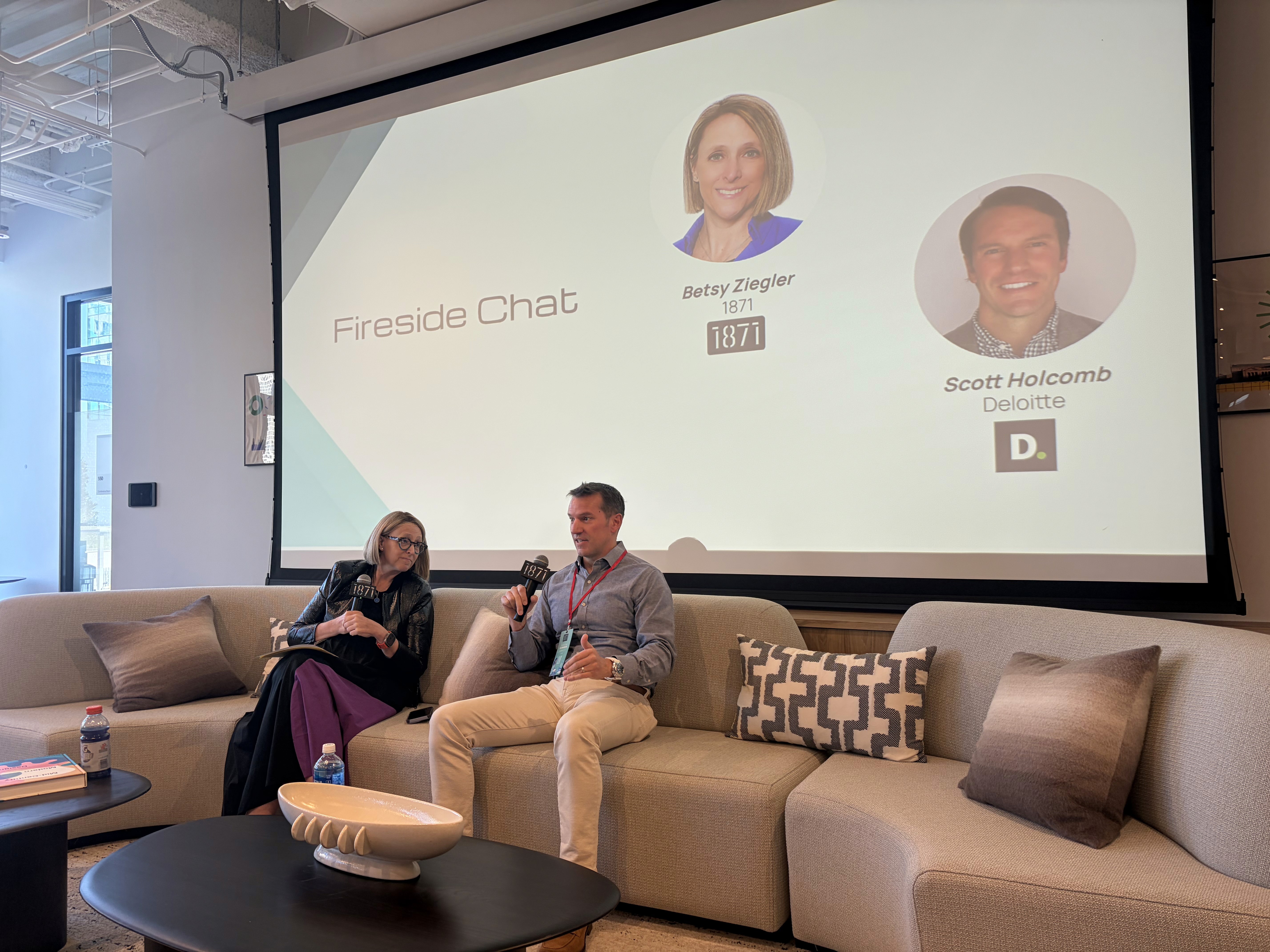
At AUTONOMOUS: OBSOLETE, Board of Innovation's Amir Ouki asked a room full of leaders who has the most to lose from this transition, and whether those same people are the ones deciding what changes.
Amir was recently named a partner at Board of Innovation. I work with him closely, and there's a reason. He talks about AI transformation with a clarity and conviction that's rare in this space. Direct, precise, and honest about what's actually changing.
He opened AUTONOMOUS: OBSOLETE with a question that nobody in the room was ready for.
What share of your revenue is attached to work that AI can now do autonomously?
Then he laid out a framework I've been thinking about since. Two layers of work exist inside every business. Intelligence and judgment.
Intelligence is the work of processing and producing. Research. Analysis. Drafting. Modeling. Pattern recognition. Work that can be learned and replicated. The quality of the output matters. The person who produced it does not.
Judgment is the work someone has to own. A physician who looks a patient in the eye. A portfolio manager making a call in front of a client. A CEO deciding to turn their Chief People Officer into their Chief AI Officer. Judgment requires accountability, relationship, sometimes physical presence. It can't be separated from the human delivering it.
Intelligence is the work that can be learned. Judgment is the work that has to be owned.
If you read TGB issue 21, you watched that distinction play out in real time. Wade Foster's hackathon at Zapier was intelligence layer work. Build a reconciliation agent. Automate a content workflow. Redesign onboarding with AI. Learnable, replicable, scalable. That's why daily usage went from 10% to 50% in a week. The intelligence layer is easy to unlock once you let people touch the tools.
But Wade choosing to put his CPO in charge of AI two years later? That's judgment. That call was entirely Wade's. It required reading the organization, understanding what the next phase actually needed, and betting on a people leader over a technologist. That decision was Wade. It couldn't be Wade's AI.
Amir's framework explains why both of those moves worked, and why they're fundamentally different kinds of value.
Take an honest look at most organizations. A big share of what people thought was judgment layer work is actually intelligence layer work. It has a judgment layer title. It charges judgment layer rates. But pull it apart and it's processes and workflows that are learnable and repeatable. Clients are starting to see that.
Three disruption mechanisms hitting at the same time
Amir mapped three disruption mechanisms hitting at the same time. First, direct substitution. Klarna cut its customer service workforce nearly in half after deploying AI agents. Software companies charging $50k or $100k a year are watching internal AI tools on the client side do the same workflows for almost nothing. The SaaSpocalypse is real and it's accelerating.
Second, client self-sufficiency. This one is quieter and more damaging. Your biggest competitor is your own client. A mid-level employee with Claude or ChatGPT can now produce 30 to 50% of what they used to buy from you. They won't cancel. But they'll renegotiate. The engagement starts later. And once that conversation happens, the relationship shifts permanently.
Third, the erosion of the trust premium. Consulting firms, agencies, advisory shops have always charged partly because the client couldn't see inside the box. AI is making that box transparent. Clients can pressure-test a deliverable before the meeting starts and develop their own sense of what the work actually involves. When the process stops being mysterious, the pricing has to change.
All three are happening at once. Direct substitution gets the headlines. Client self-sufficiency does the most damage. Trust premium erosion is the one leaders keep avoiding.
Scarcity doesn't disappear. It relocates.
Amir referenced an economist at Chicago Booth, Alex Emas, who's been building an argument about what happens when production gets really cheap across the board. His thesis is simple and I think it's right: scarcity doesn't disappear. It relocates.
Scarcity doesn't disappear. It relocates.
When intelligence becomes abundant, what becomes scarce is the human element that can't be separated from the product. Presence. Provenance. Accountability. Trust. The judgment layer.
He pointed out something I liked. Look at how the wealthiest people in the world spend when they have no constraints. Live performances. Small venues. Personal relationships. Genuine human presence over the infinite content available to them. That pattern tells you where value concentrates when everything else is abundant.
So what happens to pricing? Every retainer, every hourly rate, every contract has always bundled intelligence and judgment into a single number. AI is pulling them apart. The intelligence portion reprices downward fast. But the judgment portion, once it's visible on its own, often turns out to be worth more than it was getting credit for.
That's the opportunity inside all of this. The parts of your business where a client would genuinely notice if the human were removed are becoming more valuable. Not less.
Amir also talked about entirely new service models that become viable when intelligence is cheap at scale. Continuous personalized healthcare support. Ongoing financial guidance for people who could never afford an advisor. Services that adapt to an individual in real time instead of serving the average. These categories barely exist today. They will.
Why most organizations aren't moving
And then he was honest about why most organizations aren't moving on any of this. The people with the most power to enable the transition are usually the ones with the most at stake in the current model. The partner whose book of business is intelligence layer work. The product team whose roadmap is organized around a workflow that might not exist in six months. The leadership structure built around functions that look very different a year from now.
Incentives shape behavior. And most org charts were designed in a world where analysis was expensive and human time was the bottleneck. That assumption is gone. The structure built around it is still there.
Three closing questions
He closed with three questions. I think they're the right ones to end on.
1) What share of your revenue is intelligence layer work, and what's the timeline before it reprices?
2) What parts of what you deliver are genuinely proprietary or relational?
3) What would it take to redesign around the judgment layer while protecting the revenue you're running on right now?
That last one is the hardest. And the most important.
By the numbers
2 layers. Intelligence and judgment. Every business sits in both. AI has crossed the threshold on one of them. The question is how much of your revenue lives in the layer that just got commoditized.
30-50%. How much of what a client used to buy from you they can now approximate internally with a mid-level employee and AI. They won't cancel. They'll renegotiate. And the starting point of the engagement moves later every quarter.
3 disruptions. Direct substitution, client self-sufficiency, and trust premium erosion. All happening simultaneously. The first gets the headlines. The second is more consequential. The third is the one nobody wants to discuss.
AUTONOMOUS: OBSOLETE · Board of Innovation Opening Session · May 2026
What to do this week
Amir's three closing questions are the audit. Run them on your own business this week.
First: map your revenue against the two layers. What percentage of what you charge for is intelligence work and what percentage is judgment work? Be honest. If a mid-level employee with AI could produce 80% of a deliverable, that's intelligence layer revenue, regardless of what you call it on the invoice.
Second: identify what you deliver that a client would genuinely miss if the human were removed. Not the output. The human. That's your judgment layer. That's where your pricing power lives going forward.
Third: ask yourself who in your organization has the most to lose from this transition, and whether they're the ones making decisions about it. That's where the real bottleneck is. Not the technology. The incentive structure.
From the portfolio
The intelligence-to-judgment shift is the fundamental question underneath every AI transformation. These two companies are working on different sides of it.
Board of Innovation created and hosted AUTONOMOUS: OBSOLETE. They're an AI Transformation Studio that helps mid-market and Fortune 500 companies redesign around the intelligence-to-judgment shift. When Amir talks about mapping which work is intelligence layer and which is judgment layer, that's the strategic redesign BOI helps companies navigate.
FifthRow is built on the same principle Amir laid out: automate the intelligence layer so your team can focus on judgment. If you lead innovation, strategy, or insights, their platform turns the research and analysis grind into automated workflows, so you spend your time on the decisions that actually move the business.
The people with the most power to enable this transition are usually the ones with the most at stake in the current model.
Talk Tuesday,
Jason Hauer
Founder & CEO, HauerX Holdings
jason@hauerX.com
Jason Hauer is the founder and CEO of HauerX Holdings, where he backs and builds a portfolio of AI-native companies that accelerate how businesses grow, operate, and compete. From mid-market to Fortune 500.
Frequently Asked Questions
What does Amir Ouki mean by intelligence layer and judgment layer?
Intelligence is the work of processing and producing: research, analysis, drafting, modeling, pattern recognition. It can be learned and replicated. Judgment is the work someone has to own: a physician looking a patient in the eye, a CEO making a call. It requires accountability, relationship, and sometimes physical presence. It can't be separated from the human delivering it.
What are the three disruption mechanisms hitting at the same time?
Direct substitution (Klarna cutting its customer service workforce nearly in half after deploying AI agents). Client self-sufficiency (a mid-level employee with Claude or ChatGPT producing 30 to 50% of what they used to buy from you). Erosion of the trust premium (clients pressure-testing deliverables before the meeting starts). All three are happening at once, but client self-sufficiency does the most damage.
What does Alex Emas mean by "scarcity doesn't disappear, it relocates"?
Emas's argument is that when production becomes cheap across the board, scarcity moves. When intelligence becomes abundant, what becomes scarce is the human element that can't be separated from the product. Presence. Provenance. Accountability. Trust. The judgment layer.
How do I audit my own business against the two layers?
Run Amir's three closing questions. One, map your revenue: what percentage of what you charge for is intelligence work versus judgment work. Two, identify what you deliver that a client would genuinely miss if the human were removed, that's your judgment layer and where your pricing power lives. Three, ask who in your organization has the most to lose from this transition and whether they're the ones making decisions about it.
What is AUTONOMOUS: OBSOLETE?
AUTONOMOUS: OBSOLETE is the AI Transformation summit hosted by Board of Innovation, where Amir Ouki, recently named a partner at Board of Innovation, laid out the two-layers framework discussed in this brief.