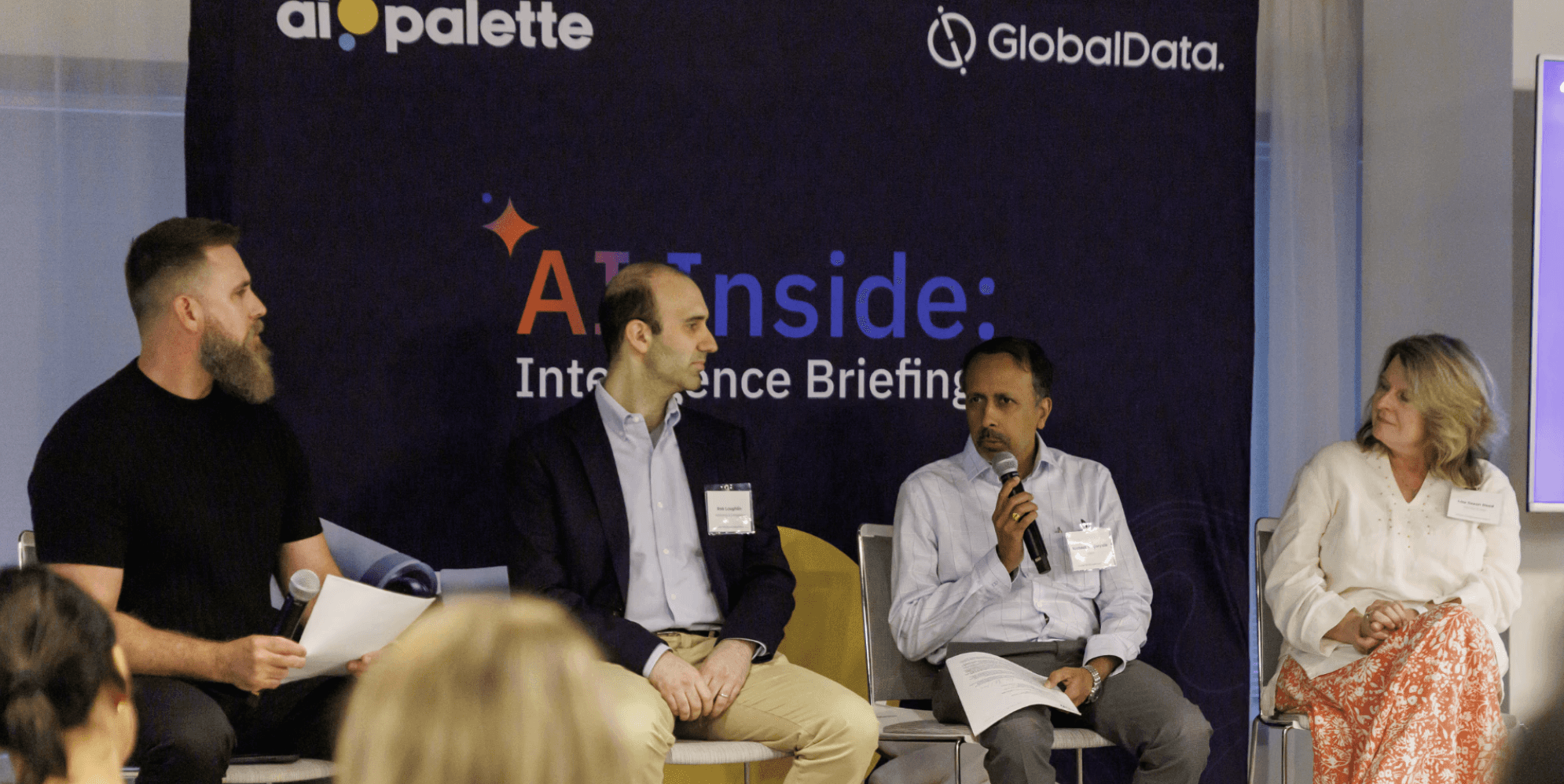
At AI Inside: Intelligence Briefings — The F&B Leadership Edition at Impact House Chicago, I moderated a conversation with Lisa Saxon Reed of McCain Foods, Kamesh Ellajosyula of ofi and Rob Loughlin of McKinsey. The event was sponsored by Ai Palette and GlobalData.
The question I took into the room was practical: how can a consumer-goods team use AI to improve innovation while keeping confidence in the decisions it makes?
Start with work a team can evaluate
The conversation kept returning to focused experimentation. A pilot needs a specific question and a result someone can judge. That is more useful than a broad mandate to put AI into the innovation process.
For a team exploring a new category, that might mean testing how well a tool identifies relevant signals or organizes evidence. For an established product team, it might mean comparing an AI-supported analysis with the research process it already trusts. Those are different jobs and need different tests.
Give people a better use for their time
Routine summaries and repeated information gathering can consume the attention a team needs for interpretation. The goal is to make room for better questions: what is changing, which evidence matters and what should we explore next?
That requires a plan for how the output enters the work. Someone needs to check it, connect it with customer and category knowledge, and decide what it changes.
Build confidence through comparison
Human review matters while a team learns where an AI-supported method is useful. Compare outputs with an established method, investigate disagreements and make the limitations visible. Confidence should come from that work, rather than from a convincing demonstration.
External intelligence can contribute a perspective the team does not have internally. The important decision is how to combine it with the company’s own evidence and which questions still require direct research.
What I would carry back to an innovation team
Choose a question worth answering. Define the decision that depends on it.
Set a comparison. Know what the current process produces and how the new approach will be evaluated.
Keep judgment visible. Name who reviews the evidence and who decides what moves forward.
Expand from what works. Use the result of a bounded test to decide the next application.
What stayed with me was the importance of curiosity paired with discipline. Teams need room to try these capabilities and a credible way to decide where they belong. That is how experimentation becomes useful innovation work.
From the portfolio
Ai Palette connects emerging consumer demand, concept development, validation, and brand intelligence in one AI-native platform built for global CPG teams.
Developing a new product or taking one into a new market? Tell me about the category you’re exploring, and I’ll help you connect the question with Ai Palette.
Where could earlier consumer evidence let your team make a faster, more confident innovation bet?