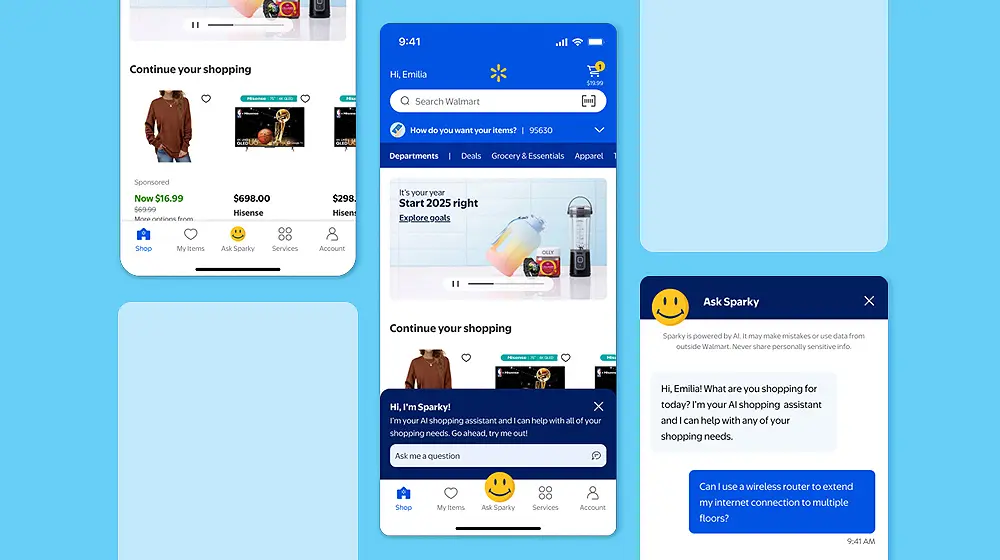
A Walmart customer asked Sparky to plan a week of healthy, high protein meals. Within seconds, the assistant offered recipes and placed the ingredients into a basket that could be added with one tap. It also checked purchases made online and in stores, which kept products already at home off the list.
Walmart CEO John Furner shared that example on the August 20, 2026 earnings call. He reported 70% more customers using Sparky than a year earlier and 40% higher order value among users than non-users. That is an observed comparison between groups, not an isolated measure of the assistant’s causal effect.
On its August 19 earnings call, Lowe’s reported more than 25 million questions handled by Mylow and a conversion rate three times higher among online shoppers using it. The company also reported 15.7% online-sales growth, alongside several investments in its digital experience.
Albertsons’ Jill Pavlovich told The Wall Street Journal that the company saw average order value rise 10% with conversational search and 26% with its fuller recipe and dietary assistants. PYMNTS reproduces her figures. These are company-reported observations, without a published controlled comparison in that account.
Target’s Q2 2026 update describes AI-powered teacher and college wish lists alongside more personalized back-to-school content. The focus is helping a shopper organize a task that involves several purchases.
My interpretation: an assistant becomes more useful when it helps carry the customer’s larger task, rather than answer a single product question.
A shopper can describe the outcome they need and let the assistant organize the work required to reach it. The conversation can remember purchase history, account for personal constraints, and keep the task moving until the basket is ready.
That conversation may begin outside the retailer’s site. Adobe measured a 54% higher conversion rate for AI-referred US retail traffic in May 2026 than for non-AI traffic. That comparison describes the arriving audiences; it does not show that the referral alone caused the difference.
Customers reaching a company through an assistant have already started working through the decision. The quality of a brand's product information shapes whether the assistant can recommend it, while current availability determines whether the customer can keep moving.
AUGUST 2026 RETAIL UPDATES
Sources: Walmart’s August 20 call, Lowe’s August 19 call, Target’s Q2 update, Albertsons’ reported interview and Adobe’s May traffic analysis.
What to do this week.
Ask the major assistants to help buy what your company sells. Start with a customer need and leave your brand name out of the question. Follow the answer until you reach a purchase, application, quote, or meeting. Capture every place where the assistant lacks enough information to recommend you with confidence.
Choose one moment in your buying journey where customers tend to pause. Give an assistant enough context to carry that part of the decision, then measure what happens to completion rate and order value.
From the portfolio
Board of Innovation helped Walmart design and pilot an AI powered nutrition service that turns shopping data into personalized guidance. The experience gives Medicare Advantage patients tailored shopping lists, healthier recommendations, and additional spending power funded by their health insurer.
Which part of buying from you still asks too much of the customer? Tell me about that moment, and we can explore how BOI would approach the experience.
What part of your customer's buying job could one conversation finish?