What changes when your innovation team can explore more possibilities before deciding which ones deserve a real-world test?
BOI reports 115x faster ideation in a pilot with Chiesi. That result concerns the ideation stage, not clinical validation or the time to bring a drug to market.
BOI's work spans early-stage ideation at Chiesi and product development at Walmart, where its engine was extended to create factory-ready tech packs for a pilot in selected stores.
The useful thread across these examples is the design of the work: connect the inputs, make outputs usable for the next step and give the team a way to evaluate what happens.
Board of Innovation’s work offers a starting point for thinking about that design. Here is how I would apply it to an innovation function.
The Funnel Is Dead
The innovation funnel you spent a decade perfecting was designed for a world that no longer exists. Discover, develop, deliver. Stage gates. Quarterly reviews. It made sense when product cycles were measured in years and markets moved slowly enough to study.
That world is gone.
Markets can move while a plan is still being reviewed. A team needs a way to bring new evidence into the process, while retaining the decisions and controls that consequential work requires.
The replacement is not a faster funnel. It is a different architecture entirely.
An innovation engine connects market signals, interpretation, modeling, action and learning. A simulation can help choose what to investigate; customer evidence and real-world testing still determine whether the idea works.
SENSE → INTERPRET → SIMULATE → ACT → LEARN
The goal is a connected learning process. Each cycle should leave evidence the next team can use, with someone responsible for updating the approach.
Four Capabilities That Separate Leaders from Everyone Else
- Insight Differentiation
Stop buying insights. Start generating them.
Most enterprises rely on the same syndicated data as their competitors. Same inputs, same outputs. No differentiation. AI changes this by fusing internal proprietary data, external market signals, and third-party sources into intelligence your competitors can’t replicate.
- Portfolio Intelligence
Your innovation portfolio is not a spreadsheet. It is a living system.
Ideas should rise and fall based on real-time signals, not last quarter's assumptions. AI enables continuous opportunity sensing, dynamic scoring, active optimization, and horizon balancing that keeps near-term revenue aligned with long-term bets. The static stage-gate portfolio is a relic. It gave you control by sacrificing speed. You can no longer afford that trade.
- Simulation before and alongside prototypes
Use a model to explore a question, then test the assumptions that matter.
Synthetic audiences and market scenarios can help a team organize hypotheses and compare possibilities. Their value depends on the data, method and validation. They do not replace real customers or establish technical feasibility on their own.
- Adaptive Foresight
Your TAM analysis was wrong the moment you finished it.
Classic market sizing is a snapshot with assumptions that decay immediately. AI transforms static TAM/SAM/SOM into adaptive foresight. Internal performance data connects with live external signals to dynamically recalculate market boundaries, detect pre-signals of emerging categories, and run multi-scenario models that actually inform decisions. The market moved. Your foresight should move with it.
Build the capability deliberately
Choose the delivery model around the work, the data and your organization’s requirements. Two questions deserve explicit answers:
Security
Where will confidential information be processed, who can access it and which controls apply? Resolve those questions before putting sensitive work into a system.
IP Ownership
Clarify rights to data, outputs and configurations, along with what happens when a vendor relationship ends. Put the agreed terms into the implementation.
Building a capability may involve internal development, a partner or a managed platform. The right choice depends on integration, control, support and the team that will operate it.
If you work with a partner such as FifthRow, discuss those requirements against the specific deployment. Its configured research systems are one way to make repeated strategic work easier for a team to run.
The Compounding Advantage
This is where AI-native separates from AI-enabled. Three dimensions that compound over time:
A useful validation loop helps a team stop weak ideas and learn from promising ones. Define the evidence needed for each decision.
Document the data, assumptions and decision methods the team can reuse. That accumulated knowledge can improve the next cycle.
The Chiesi example shows increased ideation capacity. The subsequent testing and development work remains essential.
Learning compounds when the organization preserves and uses it. Build that feedback into the work instead of assuming it happens automatically.
Where to Start
Four stages. Each builds on the last:
Find the highest-friction decision in your innovation process. Start there. Prove value before scaling.
Link internal, external, and third-party data into unified intelligence. Break the silos that fragment insight.
Embed the capability where people will use it, or redesign the workflow when needed. Evaluate quality, adoption and operating cost alongside speed.
Design connected systems that sense, learn, and guide decisions enterprise-wide. This is where compounding begins.
A more useful innovation process
Start with one part of the process where evidence arrives too late or repeated work consumes too much of the team’s time.
Keep the controls that improve decisions. Change the steps that no longer serve the work.
The aim is an innovation function that can explore more deliberately and carry better evidence toward market.
Which part of getting a new idea to market is hardest for your team? Tell me where the work slows down, and we can explore how BOI would approach it.
From the portfolio
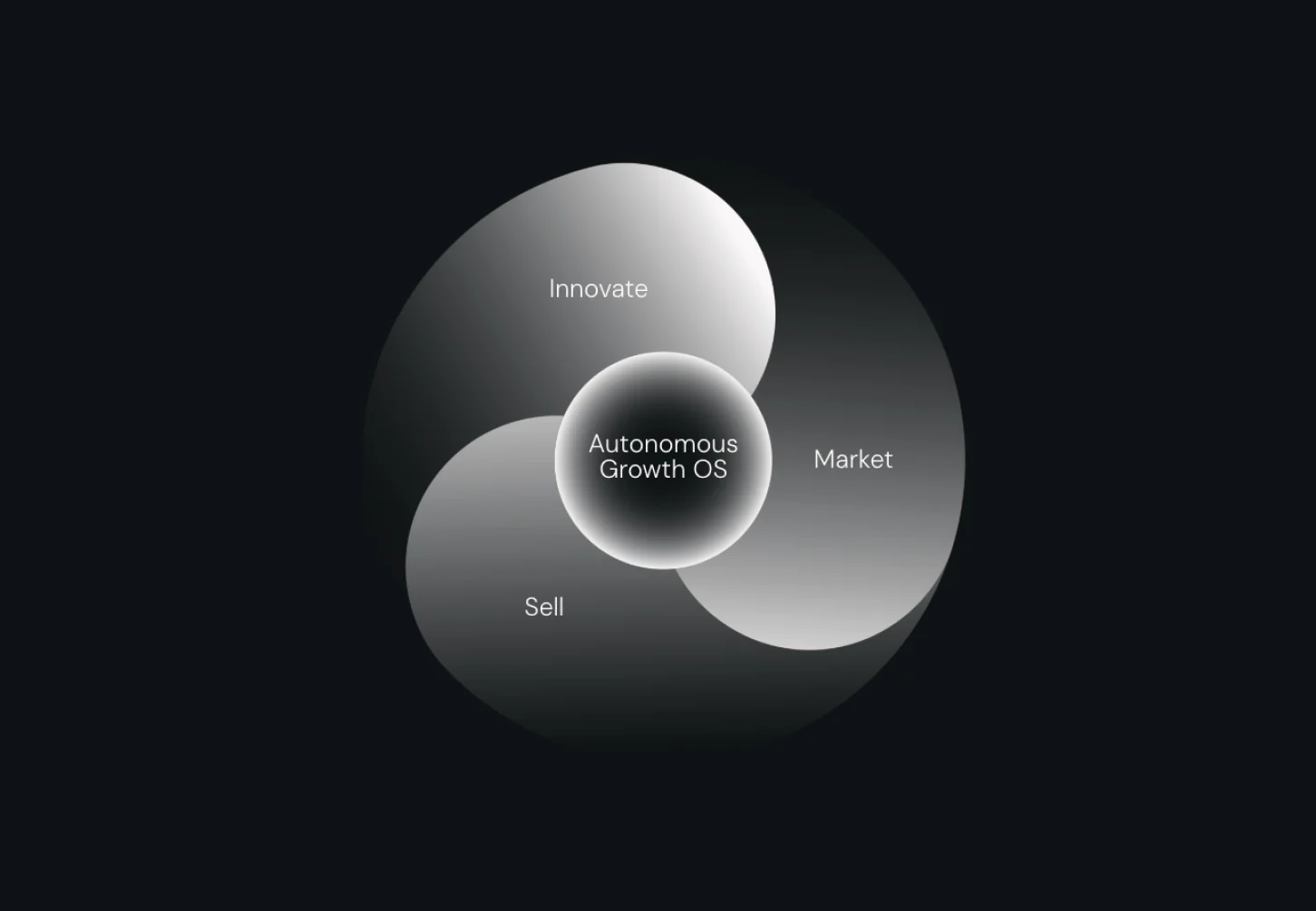
Board of Innovation redesigns what enterprises sell, how work gets done, and how the organization runs, with AI as the structural foundation. Its teams turn the strategy into working systems and validated growth.
Are you improving the old innovation process, or building the function the next market will require?